
Force USA
"All-in-one home gym systems, functional trainers, and power racks."
We have not assessed this brand yet
Not on fileForce USA Review 2026: Strategic Evaluation
Top Force USA Picks (2)
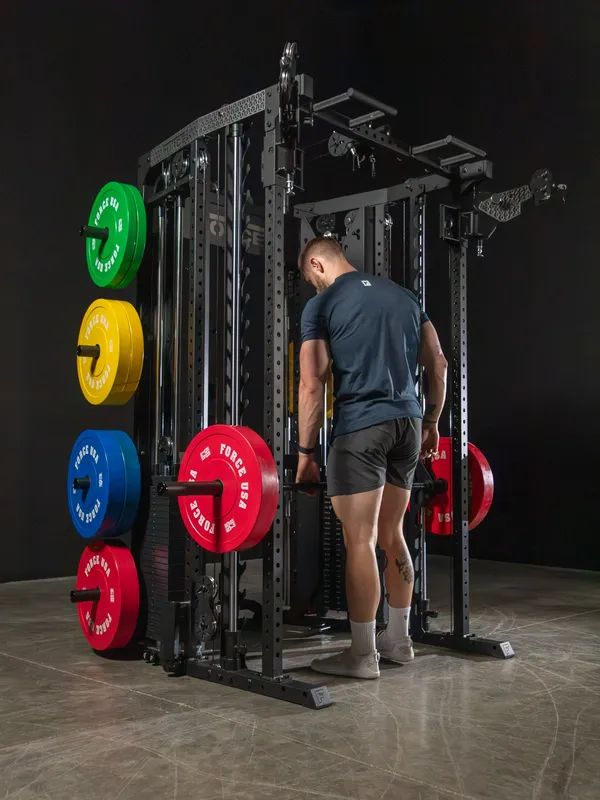
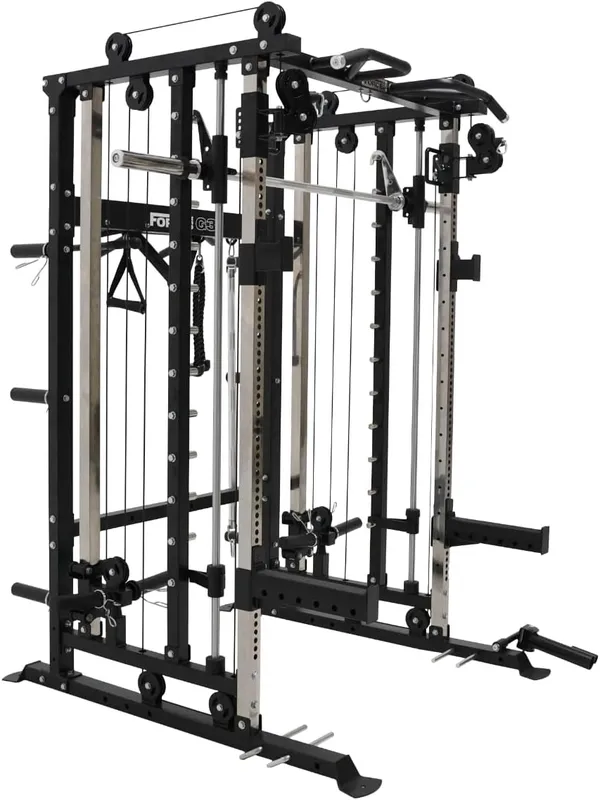
Overall Score
Not on file
Market Standing
Not on file
Price Positioning
Not on file
Asset Performance Matrix
We do not hold per-dimension scores for Force USA. Every dimension reads the same number in our records, which means the value was never assessed rather than that all six came out equal, so we show nothing rather than a number we cannot stand behind.
Verdict
Force USA makes multi-function trainers and prints the boundary between home-rated and commercial-grade equipment as a named list, which is the most useful thing any manufacturer in this category does. Eighteen model numbers carry the commercial warranty; everything else is home-rated, and putting a home-rated product in a commercial gym voids the warranty outright. That converts a vague question into a lookup. The machines themselves are substantial: the entry CORNERSTONE C10 is $4,699, the flagship M20 is $3,999 to $4,999 with a full published spec sheet, and every product page carries a frame dimension table rather than adjectives. We have never used the equipment and we hold no failure data, so this is a reading of what Force USA publishes about its own products.
Market Position
US strength equipment manufacturer selling direct, built around its own multi-function trainer category rather than assembling parts. The company states its founding belief plainly: serious training equipment should not require a commercial gym budget or a commercial gym footprint. It describes its headquarters as sitting in the American West in the shadow of the Wasatch Range, says its team is rooted in the United States with members spanning Australia and elsewhere, and gives no founding year, no headcount and no named founder on the pages we read. The product answer to that positioning is the CORNERSTONE All-In-One, which the company says went through years of design iteration and patented innovations before it reached the market, and which is now sold in more than 25 countries. The range is organised into named series by frame size and resistance type — C Series for the largest all-in-ones, G Series below that, and M Series in a more compact 2 x 2 in frame.
What Distinguishes This Brand
What no other manufacturer in our coverage publishes is the boundary between home-rated and commercial-grade equipment as an explicit list of model numbers. Most sellers of multi-gym trainers publish one warranty and leave a commercial buyer to assume it covers a gym; Force USA prints eighteen model names and states that everything else is home-rated, and states in the same document that using a home-rated product in a commercial setting voids the warranty. That single decision converts a vague question into a lookup before you buy, and it is the part of this brand worth copying. What Force USA does not offer is any information about the factory behind the product: no founding year, no headcount, no manufacturing location and no patent numbers on the pages we read, so the published dimensions, gauge and resistance ratings stand as the manufacturer's own figures with nothing to corroborate them.
Strategic Strengths
- The home warranty is genuinely long for this category and it is stated without hedging: lifetime on frame, ten years on moving parts, one year on upholstery and attachments. The home schedule explicitly covers equipment used in a private indoor setting, and the page names the setting rather than leaving it implied.
- The commercial warranty attaches to eighteen named model numbers rather than to a category, so a buyer can check whether the machine they are buying is on the list before relying on it. Force USA is unusually explicit that anything not on that list is home-rated.
- Product pages carry a frame dimension table. The M20 page publishes an exterior of 49 x 61 x 86.5 inches (77 inches wide with the Smith Machine fitted), an interior of 43 x 61 x 83 inches, and uprights specified as 11-gauge 3 x 3 in steel with a 1 in hole pattern and 2 in laser-cut spacing on all sides.
- Resistance options are published with real numbers rather than descriptors: the M20 plate-loaded configuration is rated up to 270 lb per side, the weight-stack version has a 200 lb base upgradable to 250 lb, and both Freestyle Arms at a 1:1 ratio are rated to 500 lb.
- The price ladder is published and spans a wide range, so a buyer can match a machine to a budget without a conversation. The all-in-one collection lists the C10 at $4,699, the C20 at $6,499, the M10 at $2,999 to $3,499, the M20 at $3,999 to $4,999, the Functional Trainer Rack at $3,399, the Tandem Tower at $2,499, and the G3 and G4 at $1,999 and $2,999.
- Within the all-in-one range there are three frame sizes and three resistance types to choose between — plate-loaded, weight stack and dual-stack — so the choice is about how the machine resists rather than only how big it is.
- The company states the machines are in homes across more than 25 countries, and publishes a store locator and a dealer network rather than relying on a single sales channel.
- The brand positions on product breadth on a single frame rather than on steel, and it publishes the comparison data that lets you hold it to that.
Operational Risks & Limitations
- Six months on upholstery and attachments is the ceiling on the commercial schedule, and that is a consumables-grade term. The commercial terms are limited lifetime on frame and five years on moving parts, so if you are buying for a facility where pads and attachments take abuse, the six-month line is the number to plan around.
- Using a home-rated machine in a commercial gym voids the warranty outright, and the page says so without qualification. That makes the eighteen-name list the first thing to check rather than a footnote.
- The commercial schedule notes that monthly fees may or may not be charged at sites where the equipment is used, so the cost of a commercial placement is not fully stated by the warranty document alone.
- The entry price in the flagship category is high. The smallest all-in-one machine listed is the G3 at $1,999 and the M10 starts at $2,999, which is a different market from the value-tier racks these pages often compare against.
- We could not verify where the equipment is manufactured, what the production capacity is, or what the independent test data looks like. The published dimensions, gauge, hole pattern and resistance ratings are the manufacturer's own figures and we have conducted no testing of our own.
- We could not verify a claim the company makes about its own products being the original in this category. The site refers to CORNERSTONE as a category name and to patented innovations without publishing the patent numbers on the pages we read, so we can report the claim but not substantiate it.
- No assembly, delivery or installation cost is published on the product pages we read. A multi-function trainer of this size is a freight and assembly question, and Force USA does not put a number on it where we looked.
Risk Assessment
The risk with Force USA is that the warranty boundary is real and easy to miss. The commercial schedule is materially shorter than the home schedule in every category — six months on upholstery and attachments against a year, five years on moving parts against ten, and limited lifetime rather than lifetime on frame — and the company states plainly that putting a home-rated product in a commercial setting voids coverage. A facility buyer who assumes the lifetime frame term on the product page applies to their gym would be wrong on the strength of the brand name alone. The second exposure is what the six-month upholstery term implies in practice: on a machine whose selling point is the number of stations it contains, pads and attachments are the parts most likely to see heavy use, and they are the part covered for the shortest time. The third is the absence of verifiable manufacturing information — no founding year, no headcount, no factory location and no patent numbers on the pages we read — which means the published specifications cannot be corroborated by anything outside the vendor's own site. That is normal for the category and it is still a limit on what we can tell you.
Buyer Recommendation
Start by finding out which schedule applies to the machine you are actually buying. If you are equipping a home gym, the home warranty is genuinely strong — lifetime frame, ten years on moving parts, one year on upholstery and attachments — and it covers basements, garages and rooms inside a house, condo or townhome. If you are equipping a facility, take the eighteen-name list of commercial-grade products and check the exact model number against it before you sign, then plan around the six-month upholstery and attachment line. On the machines themselves, the M20 is the one to read first because it publishes a complete specification table: a 49 x 61 x 86.5 inch exterior, 11-gauge 3 x 3 in uprights with a 1 in hole pattern and 2 in laser-cut spacing on all sides, and three published resistance configurations rated from 200 lb on the weight-stack base up to 500 lb on the Freestyle Arms. That 1 in hole pattern with 2 in spacing is the fitting that most independent rack accessories use, which is worth noting against brands whose racks use a closed hole standard. Price the frame size you need rather than the range: the ladder runs from the G3 at $1,999 through the M10 at $2,999 to the C20 at $6,499, and the differences are frame size and resistance type rather than feature count. Before you order, ask for the delivered and assembled price, because a multi-function trainer this size is a freight question and we could not find a published figure for it.
Best For
- Home gym buyers who want a multi-function frame on a lifetime frame term, since the home schedule covers the frame for life, moving parts for ten years, and upholstery and attachments for one year
- Buyers who want a published frame dimension table rather than adjectives, because the M20 page gives exterior, interior, upright gauge, hole size and hole spacing as numbers
- Anyone who needs to know before buying whether a warranty applies to their setting, because the home-versus-commercial boundary is printed as eighteen named models
- People who want choice on how the machine resists, since the range spans plate-loaded, weight stack and dual-stack configurations at published ratings
- Buyers with a budget from roughly $2,000 to $6,500, since the all-in-one range publishes that whole ladder from the G3 to the C20
Ideal Buyer Profile
- A home gym owner who is replacing several single-purpose machines with one frame and intends to own it for years, which is the case the lifetime frame term and the 1 in hole pattern are designed for
- A buyer who reads specification tables rather than marketing copy, since Force USA publishes exterior and interior dimensions, upright gauge, hole pattern and resistance ratings on the product pages
- A commercial operator willing to buy from the eighteen-model list and accept the six-month upholstery and attachment term, having checked the exact model number
- Someone who wants one machine with many stations rather than a rack plus accessories, and who will accept a single frame as the limit on future expansion
- A buyer who asks for the delivered and assembled price before committing, because that figure is not published on the product pages
Not Recommended For
- Commercial buyers planning to use a home-rated Force USA model, because the warranty page states that use of home rated products in commercial settings voids the warranty
- Operators who expect a commercial-strength upholstery and attachment term, because six months on those categories is the ceiling on the commercial schedule
- Buyers who need published manufacturing location, capacity or patent numbers to justify the purchase, since none of those appear on the pages we read
- Anyone who needs a turnkey delivered and installed price from the product page, because no assembly, freight or installation figure is published where we looked
- Buyers on a tight budget who want a simple rack rather than a multi-station frame, since the smallest all-in-one machine listed is the G3 at $1,999 and the range is built around combined stations
- Facilities that need the warranty to follow the machine between locations, because the warranty page ties coverage to the setting and does not describe a transfer term
Competitive Positioning
Force USA's honest competitive claim is product breadth on one frame, and the comparison that can be made from published documents is warranty structure rather than steel thickness. Its home schedule of lifetime frame and ten-year moving parts is long for this category, and the decision rule it publishes — the warranty attaches to the setting, so the model name decides which schedule you get — is more useful than a marketing claim because it is checkable. The counterweight is the commercial schedule, where six months on upholstery and attachments is a consumables-grade term and the frame is limited lifetime rather than lifetime. We are not going to repeat the earlier claim on this page that Force USA uses thicker steel than anyone else: the company publishes no gauge comparison against competitors, and the one gauge figure we can cite is its own, 11-gauge 3 x 3 in uprights on the M20. Against value-tier rack brands, the comparison is category rather than tier — this is a multi-station frame starting at $1,999 for the smallest model, not a rack, and it should be read against machines of the same kind rather than against a plate-loaded rack. Our Bells of Steel page covers the opposite end of this market, where you buy a parts list and configure it yourself; our Titan Fitness page covers a value-tier rack where the accessory fitting is closed.
Frequently Asked Questions
Which Force USA machines carry the commercial warranty?
Force USA publishes the commercial warranty against eighteen named model numbers rather than against a category, and states that everything else is home-rated. The named commercial-grade machines are the C20 All-In-One Trainer, the Functional Trainer Rack, the Tandem Tower, the G15 Pro and G20 Pro All-In-One Trainers, the X15 Pro and X20 Pro Multi Trainers, the Pro FID Bench, the Ultimate Leg Press Hack Squat Combo, and eight Solitude machines covering abdominal and back extension, abductor and adductor, assisted chin-up and dip, bicep and tricep, lat pulldown and seated row, leg extension and leg curl, leg press and calf raise, and rear deltoid and pec fly. The same document states that use of home rated products in commercial settings voids the warranty, so the list is the thing to check before you buy rather than a footnote. Source: forceusa.com/pages/warranty, retrieved 5 October 2026.
What does a Force USA multi-gym trainer cost?
Force USA publishes the price ladder on its all-in-one collection page. The entry machines are the G3 at $1,999 and the G4 at $2,999, the Tandem Tower at $2,499, and the M Series M10 at $2,999 to $3,499. The M Series M20 is $3,999 to $4,999 depending on configuration, the Functional Trainer Rack is $3,399, and the CORNERSTONE all-in-ones are the C10 at $4,699 and the C20 at $6,499. The differences across that range are frame size and resistance type rather than feature count, with plate-loaded, weight stack and dual-stack options available. We could not find a published figure for delivered and assembled price, and a machine of this size is a freight question, so ask for that separately. Source: forceusa.com/collections/all-in-one, retrieved 5 October 2026.
What are the dimensions and weight capacity of the Force USA M20?
The M20 product page publishes a full frame specification table. Exterior is 49 x 61 x 86.5 inches, or 77 inches wide with the Smith Machine fitted; interior is 43 x 61 x 83 inches. The uprights are specified as 11-gauge 3 x 3 in steel with a 1 inch hole pattern and 2 inch laser-cut spacing on all sides. Three resistance configurations are rated separately: plate-loaded up to 270 lb (122 kg) per side, weight stack with a 200 lb (91 kg) base upgradable to 250 lb (113 kg), and both Freestyle Arms at a 1:1 ratio up to 500 lb (227 kg). We did no testing of our own, so these are the manufacturer's published figures. Source: forceusa.com/products/m20, retrieved 5 October 2026.
Where is Force USA based and where is the equipment made?
On location, Force USA describes its headquarters only in general terms, saying it sits in the American West in the shadow of the Wasatch Range, and that its team is rooted in the United States with members spanning Australia and elsewhere. On manufacturing, we could not verify it: the About page gives no founding year, no headcount, no named founder and no factory address, and the product pages reference CORNERSTONE as a category and mention patented innovations without publishing patent numbers. The company does publish a store locator and a dealer network, and states the machines are in homes across more than 25 countries. Source: forceusa.com/pages/about and /pages/locations, retrieved 5 October 2026.
How does Force USA compare to other multi-function trainers?
The comparison we can make from published documents is warranty structure, not steel. Force USA's home schedule is lifetime on frame, ten years on moving parts and one year on upholstery and attachments; its commercial schedule is limited lifetime on frame, five years on moving parts and six months on upholstery and attachments, and it applies to eighteen named models. That explicit list is the part of the proposition worth comparing against anyone else, because most sellers of this category publish a single warranty and leave a commercial buyer to assume it covers a gym. We are not repeating the earlier claim on this page that Force USA uses thicker steel than competitors, because no gauge comparison is published against other brands; the only gauge figure available is Force USA's own, 11-gauge 3 x 3 in uprights on the M20. Source: forceusa.com/pages/warranty and /products/m20, retrieved 5 October 2026.
A small team cannot hand-write a page for every brand we track, so this one is generated from the same record the scores come from. It summarises that record and reports nothing we measured.
✓ Strategic Strengths
- We hold no sourced strengths list for this brand. This is a gap in our record, not a finding: the strengths of a brand that publishes no specification sheet, no warranty schedule and no price list cannot be asserted from a record we do not have.
! Operational Risks
- We hold no sourced risks list for this brand. We have not audited it, so we are not going to report that we found nothing: an empty record is not a clean result.
Frequently Asked Questions
What is Force USA?
All-in-one home gym systems, functional trainers, and power racks.
How does FitnessNav rate Force USA?
Force USA has no per-dimension score on file, so we give it no overall score and no market position rather than a default one. Every dimension in our records holds the same value for Force USA, which is the default our scoring table starts from rather than an assessment, so we publish no per-dimension score for this brand. Overall score = durability 25% + innovation 20% + UX 20% + value 15% + support 10% + technology 10%.
Who is Force USA best suited for?
Commercial gyms, multi-site operators and studio buyers comparing equipment suppliers. In this segment the published warranty schedule and the physical specification of the machine are the two documents worth reading before anything else.
How does Force USA compare with alternatives?
Our published rankings place Force USA in 8 best lists, including Best Cable Machine Brands and Best Elliptical Under $2,000. Same-sector peers are listed below, each scored on the same six dimensions.
How much does Force USA cost?
We do not publish price tiers we cannot verify. Verified equipment and software options for Force USA are listed on this page with live retailer pricing. We may earn an affiliate commission when you buy through those links, and that never influences our scores.
Network Nodes
Related in equipment Sector
Related Equipment Brands
Frequently ranked alongside Force USA