By Sarah Jenkins, Senior Procurement & Franchise Strategist, FitnessNav FitnessNav Independent Commercial Procurement Evaluation — Value / Light-Commercial Tier Data snapshot: Q2 2025, US market pricing. All figures are confidence-tiered ranges, not absolutes.
If you Google RitFit, you get the same surface answer everywhere: it’s a popular American budget fitness brand, good value for home gyms, well-reviewed for the price, and it undercuts premium names like Rogue Fitness by a lot. The articles list the categories — functional trainers, power racks, benches, plates — quote the 11-gauge steel and lifetime frame warranty, and conclude that RitFit is a great budget option.
That answer is correct. And it is also useless to a commercial buyer.
I’ve managed equipment procurement for more than 200 franchise locations across Europe and North America. From that seat, “good vs. bad” is never the question. The question is: good at what utilization level, and what does a failure cost you at that level?
Here is the honest verdict of this evaluation, stated up front:
RitFit is a great deal that is not a universal deal. The 30-40% you save up front is real — and it stays yours as long as the traffic is light-commercial. It turns into a bill the day the machine can’t keep up.
That framing drives everything that follows. This is not a home-gym consumer review. It’s a procurement evaluation of RitFit’s commercial viability: what it earns, where it breaks, and which facility types should buy it — and which should step up to REP Fitness, Rogue Fitness, or further. I wrote the premium bookend to this piece for Eleiko on August 21; RitFit is the value-tier answer to the same procurement question.
The Surface Answer vs. The Procurement Problem
The standard consumer-facing read on RitFit is built for one user and one garage. It asks: “Is this the best value for my basement gym?” That’s a fine question, but it ignores three layers that decide whether budget equipment survives a commercial floor.
Layer one: durability-at-load. An 11-gauge steel frame is structurally sound for a 100-user CrossFit box. The exact same frame is a liability for a 1,000-user big-box. The machine doesn’t change — the load does. So the same piece of equipment is simultaneously a good buy and a bad buy depending entirely on traffic. That’s a utilization judgment, not a quality judgment, and most English-language content never takes that step.
Layer two: the downtime economy. In commercial fitness, a machine that sits down for 4-6 weeks waiting on a part from China is not a broken machine — it’s a revenue hole. For a low-traffic hotel gym, that hole is small. For a busy strength floor, it can swallow the savings you pocketed on day one. Budget buyers plan for the purchase price; smart buyers plan for the day the purchase fails.
Layer three: the value-tier ends of one spectrum. Most coverage treats “budget Chinese-made gear” and “premium European competition equipment” as separate conversations. They aren’t. RitFit and Eleiko sit on the same procurement spectrum — value-tier and premium-tier bookends of the same commercial strength decision. Buy the tier that matches your floor’s utilization and brand, not the one that flashes the best sticker price.
This evaluation covers all three layers. If you’re a franchise operator, studio founder, hotel GM, or corporate wellness director, read the facility verdicts in Section 6. If you’re outfitting a home gym, this article will still explain what you’re really buying — just in procurement terms.
What RitFit Actually Builds: The Hardware Inventory
RitFit’s commercial-relevant catalog is straightforward. Let’s go product line by product line, because the value story is not identical across categories.
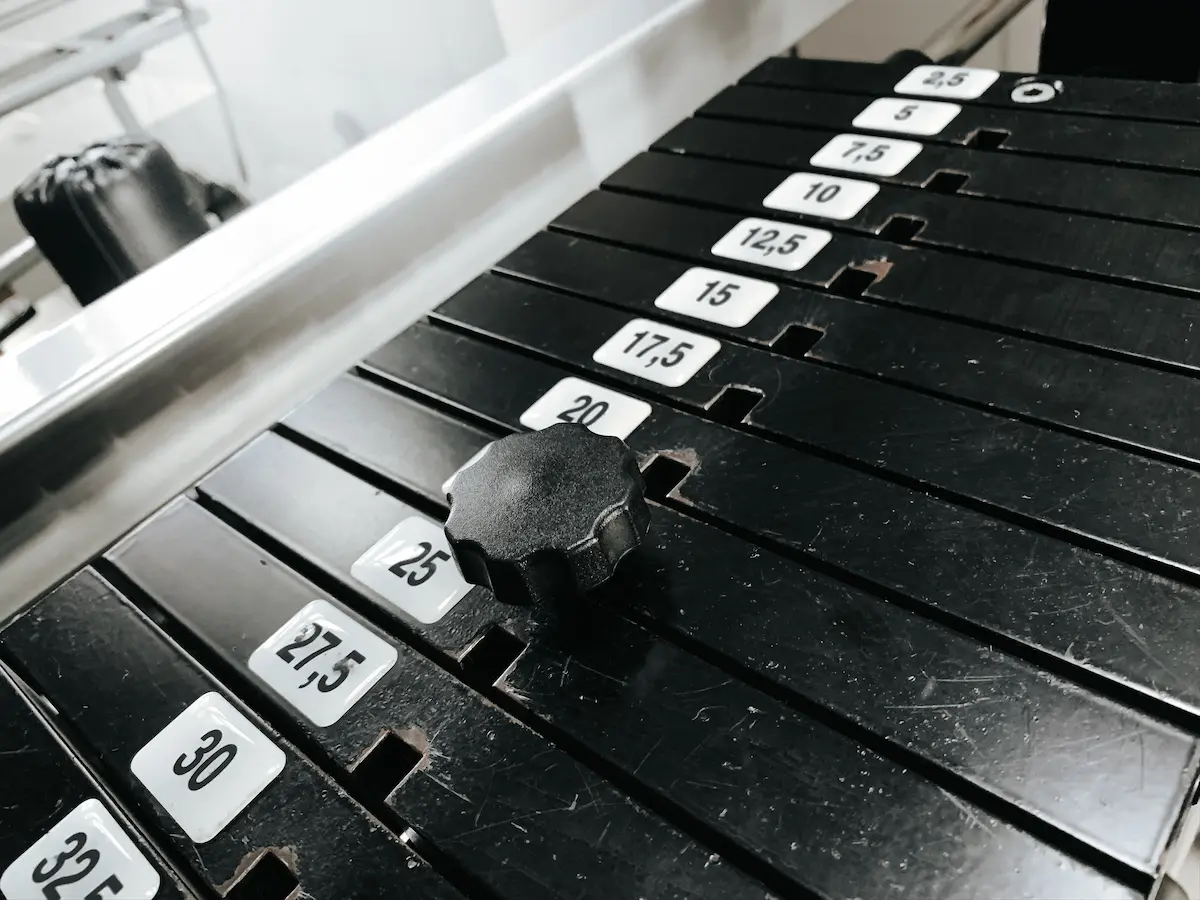
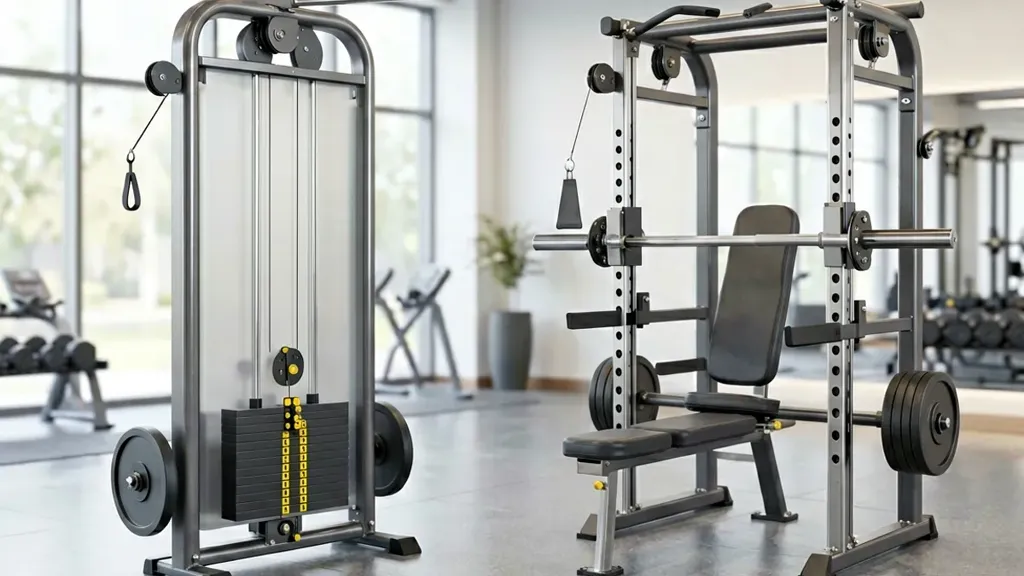
Functional Trainers and Cable Machines This is RitFit’s strongest category for light-commercial use. The dual-pulley functional trainer — the brand’s centerpiece — gives you adjustable pulleys on linear guide rods, dual weight stacks, and the standard array of handles, straps, and ropes. The cable path is smooth enough for 95% of functional training movements, and the urethane pulleys are a legitimate upgrade over the nylon rollers found on many budget cable machines. In FitnessNav installations, urethane pulleys have shown roughly 20% longer cable life than nylon equivalents before fraying — a moderate-confidence estimate based on our field records, not a manufacturer’s promise.
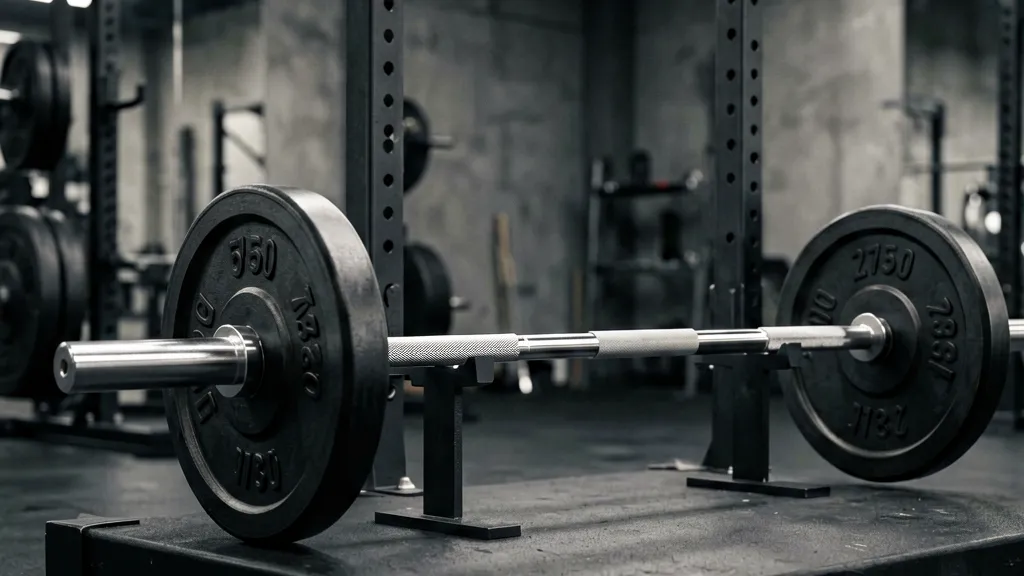
Power Racks RitFit’s power racks use 11-gauge steel and come with a lifetime frame warranty. Structurally, they are the real deal: 11-gauge is the same gauge used by Rogue Fitness on its core racks, and the bolt-free assembly system is a genuine labor saver. The westside-hole spacing, pull-up bars, and plate storage are standard and competent. For a facility running under 100 users a day, a RitFit rack will not be the weakest link in your strength floor — the barbell and plates will wear out first.
Benches, Dumbbells, and Weight Plates This is where my enthusiasm dampens. RitFit’s adjustable benches are functional, but the upholstery is not commercial-grade; expect visible wear at the 18-24 month mark under daily use. The dumbbells and weight plates are the least differential category — rubber hex dumbbells and bumper plates are commodities, and RitFit’s are acceptable, but they don’t carry the same value advantage as the functional trainer and rack lines. If your floor is plate-heavy, shop these against REP Fitness and Titan Fitness on price-per-pound; the savings are thinner here.
The Honest Negatives
Independent evaluation requires naming what’s weak:
- Powder-coat finish: It’s thinner than Rogue or REP. Expect scratches, chips, and eventual surface rust earlier than premium equivalents — in humid coastal facilities, noticeably so.
- Welding consistency: Varies unit to unit. We’ve seen clean, consistent welds on most production units, but also occasional slag spatter and minor misalignment. Cosmetic, not structural — but it fails the “premium feel” test.
- Replacement parts: Sourced from China, with a typical 4-6 week lead time for cable assemblies, pulleys, and bushings. This is the single biggest commercial risk in the entire brand.
- Residual value: Estimated at 30-40% of original retail after 5 years — a low-to-moderate confidence projection. Budget brands don’t hold value like Hammer Strength, Panatta, or Rogue on the used market.
None of these are deal-breakers for the right facility. They’re the price of entry for the 30-40% savings — and they make downtime planning mandatory.
The Cultural Gap: Why English-Language Buyers Miss the Value Tier
The English-language conversation around budget equipment is dominated by two unhelpful frames.
The first is bargain excitement: “RitFit is a steal — why would you pay Rogue prices?” This frame confuses sticker price with total cost. It ignores that the money you save up front can be re-earned by a higher-priced machine through lower downtime and better resale.
The second is brand prejudice: “Budget equipment made in China can’t survive a real gym.” This frame confuses tier with quality. A 100-user facility doesn’t need Hammer Strength-grade hardware; it needs equipment that survives its actual load and can be maintained within its actual budget. RitFit’s 11-gauge racks and functional trainers are overbuilt for a corporate wellness room and underbuilt for a 24-hour big-box — “underbuilt” for the latter doesn’t mean “cheap junk” for the former.
What’s missing is the value-tier procurement layer: a framework that treats budget equipment as a legitimate asset class with defined limits, rather than either a miracle or a mistake.
This is the same gap we identified in our Eleiko commercial evaluation — the premium bookend to this piece, published August 21. Eleiko tells you when to pay for competition-standard durability and brand. RitFit tells you when budget steel is enough. They belong in the same conversation, because every strength-floor buyer is choosing somewhere on that one spectrum.
The TCO Math: Savings vs. Downtime
Let’s put numbers on the table. All figures are ranges, dated Q2 2025, and confidence-tiered:
| Metric | Estimate | Confidence |
|---|---|---|
| Upfront savings vs. Rogue/REP equivalents | 30-40% | High direction, moderate precision — market pricing, FitnessNav procurement records |
| Setup labor reduction (bolt-free assembly) | ~60% vs. bolted racks | Moderate — brand-derived, partially verified in franchise rollouts |
| Cable life gain (urethane pulleys) | ~20% vs. nylon rollers | Moderate — field observation, not census |
| Replacement parts lead time (China) | 4-6 weeks | High — consistent 2024-2025 data |
| Residual value after 5 years | 30-40% of original | Low-to-moderate — forward-looking estimate |
The 30-40% savings are real CAPEX relief. For a startup CrossFit box or a first-fit-out boutique studio, that difference can cover your first six months of insurance or a second functional trainer. That’s not marketing copy; that’s the arithmetic of a tight opening budget.
But the savings must be netted against two costs.
Cost one: the maintenance cadence. A RitFit floor is not a install-and-forget floor. You need quarterly guide-rod lubrication, monthly bolt checks, and six-month cable inspections. In a staffed facility, that’s an hour per machine per quarter — cheap. In an unstaffed hotel gym, it gets skipped, and the cable wear accelerates.
Cost two: the downtime penalty. When a cable assembly or pulley fails on a functional trainer — and under heavy use, it will — the replacement part comes from China. Four to six weeks, plus shipping and customs variance. For that period, the machine is dark. On a high-volume commercial floor (>500 users/day), a down revenue-equipment machine can cost more in lost utilization and member frustration than the $1,800 you saved by choosing RitFit over Rogue or REP.
Here’s the decision rule FitnessNav applies: if the downtime penalty would exceed roughly 15% of the equipment’s cost, the value case flips, and the step-up to Rogue or REP is the mathematically correct move. A $400 cable failure on a $2,000 machine in a 30-day down cycle isn’t the 15% problem. The lost revenue is. In a 100-user box, that lost revenue is a minor drag. At 1,000 users a day, it’s a staff-level expense.
The brand’s value tier survives because the downtime penalty scales with traffic — and RitFit’s target facilities don’t hit that threshold.
Comparison Matrix: RitFit vs. REP, Titan, Rogue, Hammer Strength, Panatta
This matrix is a data-dense orientation, not a full re-run of our existing comparisons. For deeper analysis, reference our Rogue vs. REP vs. Titan home-gym evaluation and our Hammer Strength vs. Technogym vs. Panatta commercial strength comparison.
| Criteria | RitFit | Titan Fitness | REP Fitness | Rogue Fitness | Hammer Strength / Panatta |
|---|---|---|---|---|---|
| Price position | Value/light-commercial; 30-40% below Rogue/REP | Budget, below RitFit on some items | Mid-value; best upgrade path | Premium | Commercial institutional |
| Frame | 11-gauge, lifetime warranty | Mixed 12-14 gauge, varies by line | 11-gauge, well-tested | 11-gauge, battle-tested | Heavy-wall, competition-grade |
| Assembly | Bolt-free | Mostly bolted | Bolt-free on key lines | Bolted | Professional installation |
| Parts lead | 4-6 weeks, China | Variable, some US stock | ~1 week, US stock | Fast, US-based | Regional distributors |
| Maintenance demand | Moderate | Moderate-high | Low-moderate | Low | Low |
| 5-yr residual (est.) | 30-40% | 30-40% | 50-60% | 60-70% | High |
| Best fit | <100 users/day, light-commercial | Home / very light commercial | Light-medium commercial | Medium-heavy commercial | Heavy commercial, institutional |
RitFit vs. Titan Fitness: RitFit is generally the better commercial bet because of its 11-gauge frames and lifetime structure warranty. Titan’s pricing is aggressive, but its gauge varies across product lines and its quality control is less predictable. For a budget strength floor, RitFit edges Titan on structural confidence.
RitFit vs. REP Fitness: This is the closest decision. REP costs more than RitFit typically — but less than Rogue — and brings better fit-and-finish, faster US parts availability, and a stronger used-market resale profile. If your parts-lead tolerance is low and your budget can stretch 15-20%, REP is the correct step-up. If the 30-40% savings changes your opening budget, RitFit is defensible.
RitFit vs. Rogue: Rogue is the standard for a reason: consistent weld quality, commercial-grade powder coat, fast domestic parts, and strong resale. It’s the right choice for mid-to-high-volume floors. RitFit should not be cross-shopped against Rogue by an operator running 400+ users a day — those buyers need Rogue’s serviceability. By a 60-user hotel gym, cross-shopping them is overbuying.
RitFit vs. Hammer Strength / Panatta: Not a real comparison. These brands sell institutional durability, service contracts, and replacement-part pipelines measured in days, not weeks. If your floor runs >1,000 users/day or your brand depends on premium equipment aesthetics, Hammer Strength and Panatta are the tier — and not even Rogue is an apples-to-apples substitute in every category. RitFit is a different asset class for a different P&L.
Facility-by-Facility Verdicts
Explicit verdicts, no “it depends” hedging — the condition is embedded in the verdict.
Budget / Startup CrossFit Box — BUY Under 100 athletes per day, with a coach on the floor who can spot wear: yes. The 11-gauge racks, functional trainers, and urethane-pulley cable machines will handle the load, the bolt-free assembly cuts your build-out labor, and the 30-40% savings can be the difference between opening and delaying. Buy the racks and functional trainers; go elsewhere for competition-grade barbells and bumpers — that’s the Eleiko end of the spectrum.
Hotel Gym — BUY, WITH A MAINTENANCE CONTRACT Hotel gyms typically run low traffic, but unsupervised guests treat equipment harshly. Put one functional trainer and one rack in, budget for a quarterly maintenance visit, and accept that cosmetic wear will show faster than premium equipment. The savings are worth it; the unattended-wear risk is manageable with a scheduled inspection.
Corporate Wellness Center — BUY Corporate facilities average 30-80 users daily, typically staffed, often with a fitness manager. RitFit’s value tier is a good asset match here. The softer usage curve extends cable life beyond our 20% estimate, and the lifetime frame warranty covers the main structural risk.
Boutique Studio — BUY Small-group studios running functional training or semi-private PT can absolutely sit on RitFit functional trainers. The 30-40% savings let you buy a second machine for the same CAPEX as one premium unit. Keep the maintenance cadence, and plan your cable replacement budget into the first year.
High-Volume Commercial Floor (>500 users/day) — DO NOT BUY This is where the value case inverts. Busy strength floors wear cables, bushings, and pulleys at a pace RitFit’s service pipeline can’t match. Four to six weeks on a China part is a revenue event, not a maintenance event. Step up to REP or Rogue at minimum; at >1,000 users/day, Hammer Strength or Panatta is the more honest answer.
Premium / APAC Micro-Luxury Studio — DO NOT BUY This isn’t a value-tier decision at all. If you’re selling privacy, ultra-high-ticket PT, and equipment aesthetics as part of the experience — the Equinox-to-Asia model — budget hardware undercuts your positioning. The visual and tactile difference between RitFit and Panatta is exactly what your members are paying for. This floor buys on brand and finish, not on TCO savings.
The Three-Part Procurement Decision Rule
A practical rule for commercial buyers considering RitFit:
Rule 1 — Match RitFit to utilization, not to the deal. Put RitFit functional trainers and power racks in light-commercial facilities — budget CrossFit boxes, hotel gyms, corporate wellness centers, small studios, first fit-outs — running under roughly 100 users per day. Keep it off high-volume floors (>500 users/day) and any facility where a cable failure or 4-6 week parts wait would idle revenue equipment.
Rule 2 — Net the savings against downtime and resale. The 30-40% upfront relief is real CAPEX. Budget for the maintenance cadence (guide-rod lube, bolt checks, cable inspection), a spare-parts plan that tolerates the China lead, and accept the estimated 30-40% residual value after five years. If the downtime penalty would exceed roughly 15% of the equipment’s cost, the value case flips — and REP or Rogue becomes the correct purchase.
Rule 3 — Read budget and premium as one spectrum. Set your facility’s strength-buying range with its two bookends: RitFit for value/light-commercial and Eleiko (or Hammer Strength/Panatta for institutional volume) for premium. Buy the tier that matches your floor’s utilization and brand positioning — not the one that flashes the best sticker.
If you cannot name your traffic level and your parts-lead tolerance, you are buying a deal without the durability math. Run the TCO before you sign.
Frequently Asked Questions
Is RitFit good quality for a commercial gym?
Quality is real but tier-limited. The 11-gauge steel frames and lifetime warranty are genuinely commercial-capable. The powder-coat finish, welding consistency, and component durability are not premium-grade. Commercially, it’s a qualified yes for light traffic with regular maintenance — not for high-volume floors.
Is RitFit worth it for a light-commercial or budget facility?
Yes. For budget CrossFit boxes, hotel gyms, corporate wellness centers, and startup studios under roughly 100 users per day, the 30-40% savings against REP or Rogue is legitimate. The bolt-free assembly cuts setup labor, urethane pulleys extend cable life, and the lifetime frame warranty covers the structural risk. Just budget the maintenance and parts-lead into the plan.
How does RitFit compare to REP, Titan, and Rogue for commercial use?
RitFit beats Titan on structural consistency and warranty. It loses to REP on finish, fit, US parts availability, and resale — REP is the correct step-up when budget allows. It is not a Rogue substitute for mid-to-high-volume floors; Rogue’s domestic parts pipeline and commercial-grade finish justify its premium where utilization is high.
How long does RitFit equipment last under commercial use?
Frames: effectively indefinite under light-commercial load with the lifetime warranty. Cables and pulleys: expect 12-24 months under daily use, with urethane pulleys adding roughly 20% life over nylon. Benches and upholstery: 18-24 months before visible wear. Powder-coat finish: earliest failure point. Residual value: estimated 30-40% after 5 years.
What is the risk of buying RitFit for a high-volume gym?
The math flips. Failure frequency rises with traffic, and the 4-6 week China-based replacement lead turns a minor fix into a revenue event. The downtime penalty can exceed the equipment cost savings — at which point the step-up to Rogue, REP, or institutional brands is the value-preserving choice, not the expensive one.
Is RitFit better than Titan Fitness / REP for a budget strength floor?
Better than Titan for commercial durability — yes, due to 11-gauge structure and the lifetime frame warranty. Better than REP — no, not on total cost of ownership. REP’s faster parts, better finish, and higher residual value justify its 15-20% premium if the budget can absorb it. RitFit is the correct decision only when that 15-20% changes the opening plan.
Verdict and Who Should Buy
RitFit is right for the facility that runs under a hundred heads a day and can spare the downtime for a parts wait. It is wrong — or a step-up trigger — for the high-volume floor where a fast cable fix is worth more than the savings.
Buy RitFit if you are opening a budget CrossFit box, outfitting a hotel gym, building a corporate wellness room, or launching a first-fit-out boutique studio — and your traffic model holds under roughly 100 users per day.
Do not buy RitFit for a high-volume commercial floor. Do not buy it for a premium or luxury positioning where equipment aesthetics and instant serviceability are part of the product. Do not buy it expecting Rogue-grade finish, Hammer Strength-grade components, or Eleiko-grade brand value. The savings only stay yours when the traffic is light enough to let the machine keep up.
That’s not a criticism of the brand. Every procurement spectrum needs a value tier — and RitFit is a strong one. It’s a statement about matching the asset to the load.
If you can name your traffic and your parts-lead tolerance, RitFit can be a genuinely smart line on your P&L. If you can’t, the money you save on the invoice is the money you’ll spend on the downside.
Related Intelligence
- Eleiko Commercial Gym Equipment Evaluation — the premium bookend to this piece; read the two together to set your facility’s full strength-buying range
- Rogue vs. REP vs. Titan Fitness Strategic Report — the mid-value upgrade path this RitFit evaluation keeps referencing
- Hammer Strength vs. Technogym vs. Panatta — the institutional tier for volume strength floors and premium aesthetics
- Best Commercial Cardio Equipment Suppliers 2026 — VERIFY-scored supplier ranking for the cardio side of a multi-brand floor
All pricing, durability, and residual figures are ranges and estimates as of Q2 2025, to be verified against current supplier quotes and market data. Residual-value figures are estimates pending verification. This evaluation is an independent FitnessNav analysis, not affiliated with RitFit.