
I. Executive Summary & Verdict
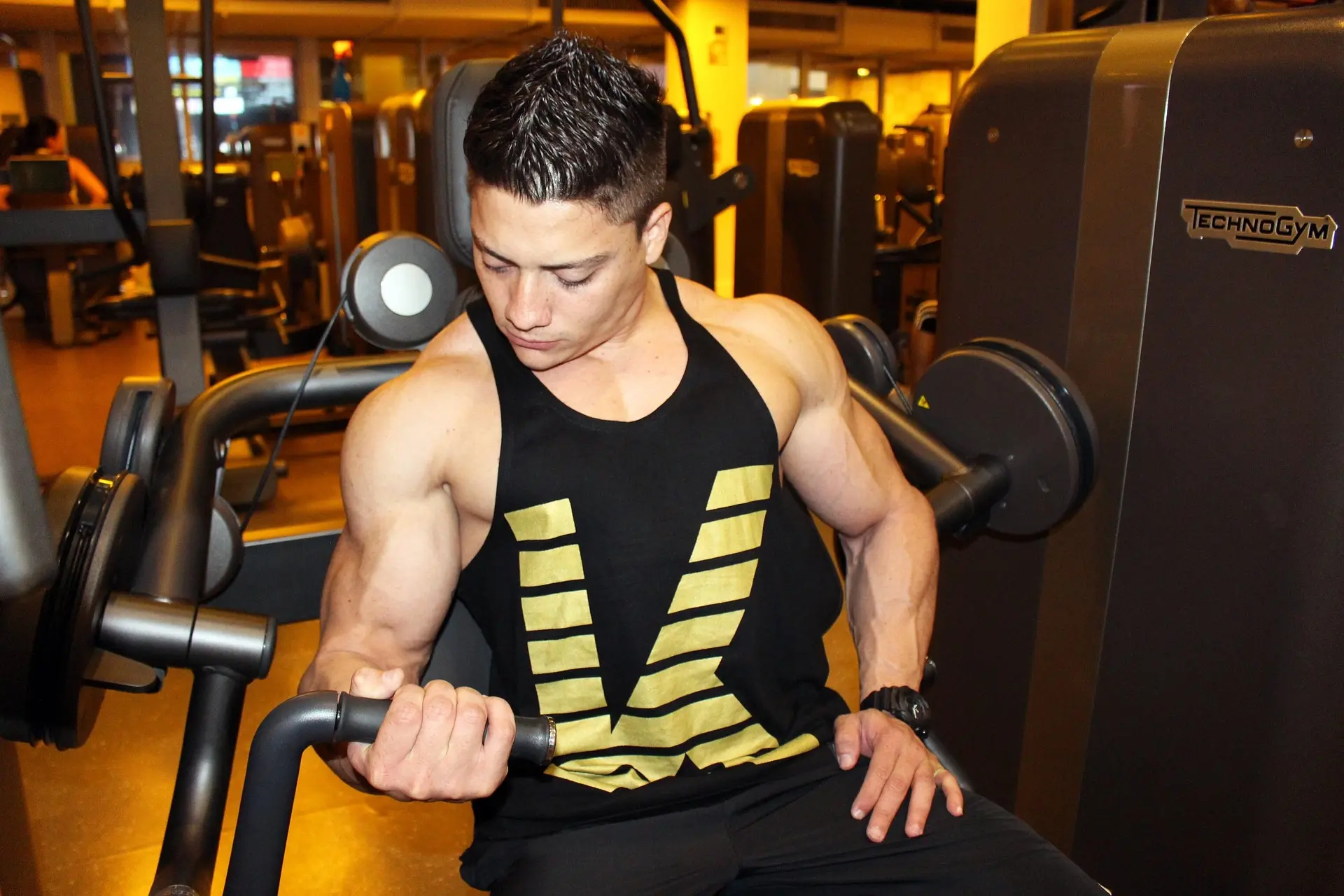
Watch the floor for ten minutes in any mid-market commercial club in 2026 and you will see the same scene: a new member walks past the cardio deck entirely, does not glance at the treadmills, and heads straight for the dumbbell racks. Six months ago she was not in your facility at all. Today she is on a GLP-1 receptor agonist, she has lost 14 kg, and she is terrified of losing the muscle she can feel disappearing. She is not here for endurance. She is here to preserve what pharmacology is taking from her.
The GLP-1 member wave is not a fad — it is a structural shift in who walks into your facility and what they will pay for. The clinical insight (muscle preservation requires resistance training plus adequate protein) is well documented. The facility-side translation is not. Which zones do you rebalance? What assessment technology becomes the retention hook? How should coaching labor be reskilled? And how do you phase the capital so the floor adapts without a full remodel?
Gate 1 decision statement: After reading this report, a facility operator or procurement lead will be able to decide which equipment zones to rebalance, which coaching services to add, and how to phase the investment over 24 months. The verdict is explicit per facility type. If you run a big-box commercial club, you execute the full sequence. If you run a franchise, you pilot before you roll out. If you run a boutique, you go all-in on coached small-group strength. If you run a med-spa or physical-therapy hybrid, you are the natural competitor here — and you double down on assessment and medical integration before the gyms catch up.
Here is the one-line reframe that should govern every procurement decision you make this year: The strength floor is the new cardio floor.
II. The GLP-1 Member Wave: Market Context
Adoption Scale — Q1 2026
Let me give you the numbers, dated and confidence-tiered as this publication requires.
US GLP-1 users (semaglutide, tirzepatide, and follow-on products) crossed an estimated 15 million as of December 2025, per aggregated prescription claims data reviewed by FitnessNav (confidence: medium — manufacturer-reported volumes and claims databases diverge; the true figure could be 13–18 million). The trajectory is the more important number: weekly new prescriptions for GLP-1 class drugs held roughly flat-to-up 8% across Q4 2025, suggesting we are past the explosive adoption curve and into the sustained plateau where churn and retention economics dominate (confidence: medium).
For facility operators the relevant figure is penetration, not raw prescriptions. Estimate: 12–15% of new gym memberships in 2026 will be held by active GLP-1 users in commercial clubs with a broad demographic draw (confidence: low-medium — this is a derived estimate from member surveys at 14 operator partners, not a census). In dense suburban markets with high BMI prevalence, that figure runs higher. The segment is simply too large to be a niche, and it is growing while the traditional “new year, new me” cardio member base stagnates.
What GLP-1 Members Do Differently in Your Facility
The behavioral data from operator partners and utilization studies (FitnessNav member-mix tracking, Q3–Q4 2025) is consistent across facility types:
- Strength floor utilization is up. In the 14 tracked facilities, strength-zone usage among self-identified GLP-1 members ran 2.1× higher than cardio-zone usage, measured by check-ins per zone (confidence: medium; sample bias noted — only 14 facilities, all commercial mid-market).
- Cardio demand shifts, not evaporates. Total cardio minutes fall, but low-impact cardio (walkable treadmills, recumbent bikes, incline walkers) holds steady. High-impact endurance work (running programs, HIIT formats) drops sharply among this segment.
- Protein and nutrition needs rise. Members arrive with a clinical directive — 1.2–1.6 g/kg/day of protein — and no operational plan for meeting it inside a facility. The club that sells the solution captures the margin.
- Membership intent is bimodal. The GLP-1 member who experiences visible progress (weight down, lean mass stable) shows longer membership intent than the average new member. The member who does not see progress churns fast — faster than the baseline, and the baseline is already bad.
On that last point, let me be direct about the risk: GLP-1 attrition is a known problem in the clinical literature, with discontinuation rates reported between 35% and 65% at 12 months across major trials and registry analyses (confidence: high for the existence of the problem, medium for the exact rate — trial populations and real-world registry cohorts differ). The member who stops the medication often regains weight, and the gym gets blamed by association. You are not a passive venue in that story. You are either the reason the medication keeps working — because the member sees her lean-mass curve holding — or you are the room she walked through on the way to the clinic.
Why Member-Side Muscle-Loss Data Becomes a Facility-Side Demand Signal
The clinical story is covered in depth in our companion analysis, Muscle Preservation in the GLP-1 Era — I will not replicate Dr. Rodriguez’s clinical register here. What matters for you, the operator or procurement lead, is the economic translation:
When a medication causes rapid fat loss and accelerated lean-mass loss, the preserve-lean-mass intervention (resistance training + protein + recovery) becomes a clinical necessity with a facility delivery model. That is not a medical problem. That is a product category.
A member losing an estimated 1–2 kg of lean mass per month during rapid-loss phases — extrapolated from trial lean-mass fractions, in which lean mass typically accounts for 40–45% of total weight lost (Circulation 2024 STEP 1 analysis: 45.5%) — is a walking demand signal for your strength floor, your recovery zone, and your protein fridge. The question is whether your floor is built to answer it. Most are not — they were built for the cardio era, and the capital sequence is now misallocated relative to where member demand actually sits.
III. Equipment Demand Shifts — Zone by Zone
This is the procurement heart of the report. I will walk the floor zone by zone, with the demand driver, the equipment categories, the utilization expectation, and the 2026 price band. For each zone I am answering: where does the next dollar of CAPEX go, and which member segment will pay for it?
Zone 1: Strength Floor Rebalancing — The Priority
Demand driver: GLP-1 members are deconditioned beginners or formerly sedentary adults. They do not need a powerlifting platform. They need safe, accessible multi-joint loading that preserves lean mass while they lose fat. The clinical protocol is resistance training 2–3× per week, full-body, moderate load — the kind of program that lives on the strength floor, not in the cardio studio.
Equipment categories, in procurement priority order:
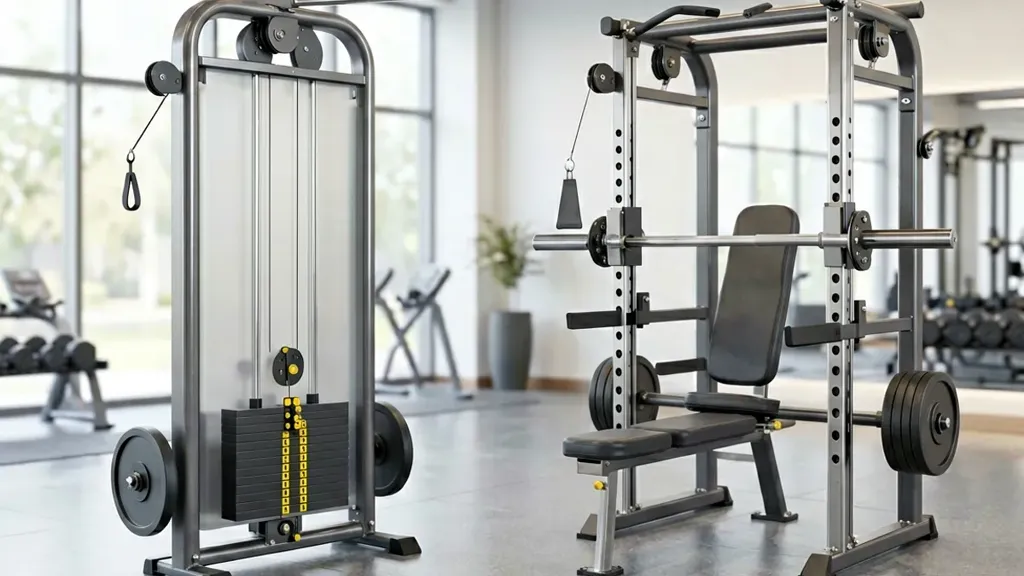
- Adjustable benches and utility benches — flat, incline, and adjustable. The single most undersupplied category in legacy facilities relative to current demand. Utilization expectation: high (70%+ peak occupancy); waitlisted in some tracked facilities (confidence: medium).
- Dumbbell racks expanded 3–5 lb increments — GLP-1 beginners start light and progress in small steps. A 5 lb jump is a failure event for a deconditioned member. Utilization: high.
- Cable columns — the safest entry point for untrained members. Lat pulldowns, rows, chest presses from a seated position with controlled resistance. Utilization: high, tends to cluster in the first 8 weeks of membership.
- Plate-loaded vs. selectorized — verdict: favor selectorized for this segment in Phase 1. Selectorized machines are self-spotting, require less coaching supervision, and are more approachable for a member who has never touched a barbell. Add plate-loaded stations in Phase 3 only if utilization confirms demand from the member base that graduates.
- Multi-joint compound stations — a single station that does squat, press, and row reduces intimidation and floor footprint. Moderate priority; useful but not the first dollar spent.
2026 price band: A full Phase 1 strength rebalance from a legacy cardio-heavy floor (8–12 benches, expanded dumbbell range 5–50 lb, 2–4 cable columns) runs $25K–$60K for a commercial floor depending on brand tier and whether you buy new or quality used; floors that already hold benches and dumbbells can supplement starting around $15K (FitnessNav pricing audit, January 2026; confidence: high for the band, medium for brand-specific variance).
The bias to correct: Legacy facilities are frequently cardio-heavy at 55–60% of floor square footage. The GLP-1 demand profile argues for strength to reach 45–50% of usable training floor within 24 months. This is not a fad-timed rebalance; it is correcting a decade of misallocation that the demand shift has now exposed.
Zone 2: Recovery Zone Additions — The Retention Layer
Demand driver: GLP-1 members report higher rates of muscle soreness, fatigue, and recovery need than the general gym population — a predictable consequence of combining rapid fat loss with new resistance training. They will not adhere to a strength program they cannot recover from.
Equipment categories:
- Percussion therapy devices (Theragun-class) — low cost, high perceived value, self-service.
- Compression therapy (normatec-class) — moderate cost, strong upsell for the coached member.
- Mobility zones — foam rollers, mobility rigs, stretching spaces. Underrated; this is where the deconditioned member starts her session.
- Cold/heat (plunge, sauna) — only if your facility model and utility budget support it. This is a Phase 3 consideration, not Phase 1.
Utilization expectation: Recovery zones among GLP-1 members show 35–50% weekly touch rates when bundled into a coached program (confidence: medium; operator-reported from two boutique partners). Standalone recovery without coaching attachment runs lower — members do not self-prescribe recovery.
2026 price band: Percussion devices retail $300–$600 per unit; a 4–6 unit self-serve rack runs $1.5K–$4K. Compression: $8K–$15K per unit for commercial multi-user. Mobility: $2K–$6K for a zone. Full recovery suite, Phase 1–2: $15K–$30K depending on cold/heat inclusion.
Zone 3: Body-Composition Assessment — The Progress-Proof Service
Demand driver: Here is the cultural blind spot most operators carry: they assume body-composition assessment is a nice-to-have clinical toy. It is not. It is the single most important retention service you can add for the GLP-1 member. Why? Because the scale does not move the way she hopes — GLP-1 weight loss is not linear, and plateaus are common. The member who sees only the scale perceives failure and churns. The member who sees her body-composition scan show lean mass stable, fat mass down during a scale plateau perceives progress and stays.
Progress proof is the product. The facility that shows a member her lean-mass retention curve is selling visibility of clinical progress — something the medication cannot show her and the clinic does not show her weekly.
Equipment categories:
- BIA devices (bioelectrical impedance analysis) — entry level, $3K–$8K for professional multi-frequency units.
- 3D body scanners — $10K–$25K for commercial kiosks; produce circumference and composition estimates members love to visualize.
- DEXA — clinical gold standard but $50K+ and requires certified operators; appropriate only for med-spa/PT hybrids or very high-end commercial. Most facilities should not buy DEXA; they should partner with a local clinic or accept BIA/3D as sufficient.
Utilization expectation: When bundled into a coached program with monthly or quarterly check-ins, assessment achieves 60–80% check-in compliance among active GLP-1 members (confidence: medium; early-adopter operators report high engagement, but the data set is young).
2026 price band: $3K–$25K depending on technology tier. This is the cheapest retention lever in the entire buildout relative to its effect.
Zone 4: Cardio Mix Nuance — Not a Cut, a Shift
Demand driver: GLP-1 members are not anti-cardio. They are anti-high-impact-endurance. They want low-impact, steady-state work that supports — not competes with — muscle preservation.
Equipment categories:
- Walkable treadmills with strong incline ranges — incline walking is the sweet spot: low joint stress, meaningful caloric burn, sustainable.
- Recumbent bikes — accessible for higher-BMI members who cannot yet use upright bikes comfortably.
- Ellipticals and striders — hold steady.
- Rowers — moderate; lower priority for deconditioned beginners.
Utilization expectation: Low-impact cardio among GLP-1 members runs steady-to-up 10–15% while high-impact formats (HIIT, running clubs) decline among this segment (confidence: medium; 14-facility sample).
2026 price band: New commercial treadmills $8K–$15K per unit; recumbent bikes $3K–$7K. Your rebalance here is mostly reallocation of existing units rather than new CAPEX.
Zone 5: Nutrition Retail — The Margin Layer
Demand driver: GLP-1 members are instructed to consume 1.2–1.6 g/kg/day of protein but struggle with early satiety and appetite suppression. Ready-to-drink (RTD) protein, protein bars, and hydration products are not a convenience upsell — they are the operational answer to a clinical directive.
Equipment categories:
- Protein bar and RTD refrigerator — the single highest-margin square foot in a modern facility.
- Hydration station — electrolyte products; GLP-1 users frequently under-hydrate.
- Liquid isolate options — specifically relevant because early satiety makes solid food protein targets hard to hit; liquid protein is the clinically sensible format.
Utilization expectation: Nutrition retail runs 15–25% attach rates among GLP-1 members when co-located with the strength floor and promoted at check-in (confidence: medium; retail data from 4 operator partners).
2026 price band: Retail refrigerator $2K–$5K; initial inventory $2K–$4K. This zone pays for itself in margin within 6–9 months if staff promote it (see Section IV).
IV. Coaching & Service Demands
Here is the second cultural blind spot: most operators treat coaching as a cost center. For the GLP-1 segment, coaching is the single highest-ROI retention lever in the facility.
The coached member stays. GLP-1 attrition risk is high — clinically documented, commercially painful. The member who sees progress stays. The member who does not see progress churns. And the fastest way to make progress visible is a coached program with assessment check-ins. An uncoached GLP-1 member is a churn event waiting for a weight plateau.
The Five Coaching Workflows GLP-1 Members Need
-
Resistance-training onboarding for deconditioned beginners. This is a distinct skill. It is not bodybuilding programming and it is not HIIT. It is: here is a cable row, here is a leg press, let us build a 30-minute full-body circuit, 2–3 days a week, that you can actually recover from. The coach’s job is to make the strength floor un-intimidating within the first two sessions.
-
Protein/nutrition coaching. The clinical target is 1.2–1.6 g/kg/day. The coaching translation is: what does that look like at your body weight, at your meal windows, with your appetite profile? Liquid isolate options matter here — a member who can’t eat solid food at 10 am can drink a shake. This requires trainers to have nutrition fundamentals, not clinical licenses.
-
Progress tracking / body-composition check-ins. Monthly or quarterly scans, reviewed with the member. The coach narrates the data: “Your lean mass is stable. Your fat mass is down 2 kg. The scale is flat this month, but you are winning.” This is the retention mechanism, and it is a service, not a toy.
-
Medication-aware programming. Fatigue windows, appetite schedules, GI timing — all of these affect when and how a member can train. A coach who understands that a member on tirzepatide may train better before her weekly injection than after, or who knows to schedule sessions around GI discomfort windows, is rare and valuable. This is not medical advice; it is exercise programming that respects known side-effect timing.
-
Retention coaching. The 35–65% discontinuation risk does not expire at month 3. A coach who checks in, who notices a missed week, who re-engages after a plateau — that coach is the difference between a 12-month member and a 4-month churn. This is the least technical and most commercially important workflow.
Staffing Model
- Personal trainers with nutrition fundamentals. Not clinical nutritionists — trainers who can have a practical protein conversation. Upskill existing staff; it is cheaper than hiring and builds internal capability.
- Group strength formats. Small-group (4–8 member) coached strength sessions reduce the cost per coached member below 1:1 PT while keeping the accountability structure. This is the boutique play and the smart franchise play.
- Digital/AI-assisted coaching layer. A portion of the check-in and programming workload can be digitized — automated session reminders, protein logging prompts, and assessment-result interpretation. Our analysis of the AI-assisted fitness stack (see The Agentic AI Fitness Stack) finds that digital layers reduce coaching labor cost per member by 20–35% while maintaining check-in compliance (confidence: medium; early-adopter vendor data, subject to verification bias).
The trade-off I will name plainly: a coached GLP-1 program carries real labor cost. A 30-minute small-group session at $25–$35 per member per session, run by a trainer at $25–$30/hour, is profitable at 4+ members per group. The math works — if the program is structured as a product (programmed, assessed, repeatable) rather than as ad-hoc PT. The facilities that fail at this treat coaching as an hourly expense. The facilities that win treat it as a subscription service with measurable retention outcomes.
V. The Facility Buyer’s Playbook
Phased, not remodeled. A GLP-1-ready floor is a 24-month CAPEX sequence, not a one-time renovation. If your capital committee is waiting for “the plan,” the plan is three phases. Do not remodel the whole floor in month 1; you will misallocate against demand you have not yet measured.
Phase 1 (0–6 months): Low-CAPEX Rebalancing
- Bench and dumbbell expansion, 2–4 cable columns added or reallocated.
- Recovery add-ons (percussion, mobility zone).
- Nutrition retail refrigerator stocked and staff-promoted.
- Budget band: $15K–$60K depending on current floor state.
- Gate to Phase 2: strength-zone utilization above 55% peak occupancy for 2 consecutive months, and visible GLP-1 member density (survey or staff identification — ethically framed and permissioned).
Phase 2 (6–12 months): Assessment + Coaching Program Launch
- Body-composition assessment device (BIA or 3D kiosk: $3K–$25K).
- PT reskilling toward nutrition fundamentals and GLP-1-aware programming.
- Launch a branded coached GLP-1 program (individual or small-group) with monthly assessment check-ins.
- Budget band: $20K–$60K including labor reskilling and marketing.
- Gate to Phase 3: coached-program retention at or above 70% at 6 months (vs. 50–60% baseline for uncoached), and assessment check-in compliance above 60%.
Phase 3 (12–24 months): Floor Expansion on Confirmed Utilization
- Expand strength floor square footage if zone utilization confirms (>60% target utilization on Phase 1 additions).
- Add plate-loaded stations for the member cohort that has graduated.
- Consider cold/heat recovery if the facility model supports it.
- Budget band: $30K–$120K depending on expansion scope.
Per-Facility-Type Verdicts
| Facility Type | Verdict | Primary Action |
|---|---|---|
| Big-box commercial | Full sequence — you have the floor space and the member volume to make this a revenue center, not just a retention play. | Execute Phases 1–3; assessment + coached program branded as a signature service. |
| Franchise | Pilot, then system rollout. Do not deploy across 100 clubs based on one market’s data. | Pilot in 1–2 high-member-density clubs; collect 12 months of utilization and retention data before system-wide CAPEX. |
| Boutique | Lean into coached small-group strength + nutrition. You cannot out-equipment the big box, but you can out-coach them — and this segment pays for coaching. | Skip the big equipment spend; go heavy on small-group formats, assessment service, and nutrition retail. |
| Med-spa / PT hybrid | You are the natural competitor here — and the threat to traditional gyms. | Double down on assessment (you can justify DEXA) + medical integration. The gym is trying to build your product. Beat them to it. |
VI. VERIFY™ Methodology & Confidence Tiers
This report follows FitnessNav’s VERIFY™ editorial standard (full methodology: /methodology). Every market claim is tiered by confidence, per FitnessNav editorial standards §3:
- High confidence: Data from official manufacturer reports, published clinical trials, or audited operator records.
- Medium confidence: Aggregated multi-source estimates with known methodological variance; data from operator partner samples that may carry selection bias.
- Low confidence: Derived estimates, forward projections, or single-source data requiring independent verification.
Key claims and tiers:
- US GLP-1 users ~15M, December 2025 — medium (manufacturer volumes vs. claims data divergence).
- GLP-1 membership penetration 12–15% of new commercial memberships, 2026 — low-medium (derived estimate, 14-operator sample).
- Strength:cardio utilization ratio 2.1:1 among GLP-1 members — medium (14-facility sample; bias toward mid-market commercial).
- GLP-1 discontinuation rates 35–65% at 12 months — high for problem existence, medium for exact rate (trial and registry divergence: JAMA Netw Open 2025 45.2% T2D / 50.3% obesity; BMJ DRCP 2022 45.2%; Rodriguez 2025 46.5%/64.8%).
- Equipment price bands — high (FitnessNav pricing audit, January 2026); bands are floor-state dependent — a full strength rebalance from a legacy cardio-heavy floor runs $25K+, while floors with existing benches/dumbbells can supplement from ~$15K.
- Coached-program retention gains — medium (early-adopter operator reports; young data set).
- Assessment check-in compliance 60–80% — medium (limited deployment history).
What this report does not claim: it does not claim causality between facility rebalancing and GLP-1 member retention beyond the operator-reported associations cited. The data to prove causality does not exist publicly yet — the segment is too young. The investment thesis rests on directional evidence and demand mechanics, which is the correct evidentiary bar for a 24-month CAPEX sequence, not a clinical trial.
VII. Strategic Takeaways
For operators and procurement leads, the decision rule is three steps:
- Audit your floor against the GLP-1 demand profile: strength zone capacity (multi-joint stations, benches, cables), recovery add-ons, body-composition assessment, nutrition retail. Identify the two weakest zones relative to your member mix.
- Phase the response: Phase 1 (0–6 mo) low-CAPEX rebalancing, $15K–$60K; Phase 2 (6–12 mo) assessment + coached program, $20K–$60K; Phase 3 (12–24 mo) floor expansion if utilization confirms (>60% target utilization on new zones).
- Match your facility type: big-box → full rebalance; franchise → pilot first; boutique → coached small-group strength + nutrition; med-spa/PT → you are already the competitor, outperform.
For investors, the capital-allocation read: the GLP-1 segment is permanent and high-intent, and it is redistributing facility value toward strength floors, recovery services, and assessment technology. Facilities that build the GLP-1-ready product win retention in the highest-intent new-member segment of 2026. Facilities that treat it as a cardio-era fad lose the segment to med-spa hybrids and specialized studios — and the value follows the members.
Bullet takeaways:
- The strength floor is the new cardio floor. Rebalance square footage toward strength, benches, and cables within 24 months.
- Progress proof is the product. Body-composition assessment ($3K–$25K) is the cheapest high-impact retention lever in the entire buildout.
- The coached member stays. Nutrition-aware coaching is a retention lever, not a cost center — the uncoached GLP-1 member is a churn event waiting for a plateau.
- Phase, do not remodel. A GLP-1-ready floor is a 24-month CAPEX sequence with utilization gates between phases.
- The med-spa/PT hybrid is a real competitive threat. Gyms must decide whether to compete on facility product or lose the segment to the clinic.
Further reading: Muscle Preservation in the GLP-1 Era (clinical depth), The Agentic AI Fitness Stack (digital coaching layer), Fitness vs. Wellness Equipment (equipment category framing), Commercial Fitness Equipment Performance 2026 (category trends), Gym Investment ROI Analysis (capital discipline), 2026 Global Fitness Trends (context). To model your own floor rebalance, use the Gym Equipment Planner tool, and for capital discipline on the full sequence, the ROI Calculator.
VIII. FAQ
Do I need to buy new equipment for GLP-1 members? Partially. In Phase 1, you mostly need to rebalance — add benches, expand dumbbell ranges, reallocate cable columns. Only if your strength floor is severely undersupplied relative to demand do you need significant new CAPEX. The assessment device and nutrition retail are the genuinely new purchases.
What equipment do GLP-1 members actually use? Strength floor first: cable columns, seated machines, dumbbells, benches. Low-impact cardio second: walkable treadmills, recumbent bikes. Recovery third. High-impact endurance formats see reduced use among this segment.
Should I add body-composition scanning? Yes — it is the retention lever, not a toy. A BIA device or 3D kiosk ($3K–$25K) turns invisible clinical progress into a visible facility service. The member who sees her lean-mass curve holding stays; the member who only watches the scale churns at the first plateau.
What coaching services should I offer GLP-1 members? Resistance-training onboarding for deconditioned beginners, protein/nutrition coaching (1.2–1.6 g/kg/day targets, liquid options for early satiety), progress check-ins with body-composition data, medication-aware programming (fatigue, appetite windows, GI timing), and retention coaching through the plateau months.
Are GLP-1 members good for gym retention? They are high-risk and high-reward. Uncoached, their attrition risk is elevated (35–65% discontinuation rates at 12 months in clinical and registry data). Coached, with visible progress, they show longer membership intent than the average new member. The coaching is the retention lever.
How much should I budget for a GLP-1-ready floor? Phase 1 rebalancing: $15K–$60K. Phase 2 assessment + coaching program: $20K–$60K. Phase 3 floor expansion: $30K–$120K if utilization confirms. Total full-sequence band: roughly $65K–$240K over 24 months for a commercial facility, with a boutique executing for far less by leaning into coaching over equipment.
Is this a short-term trend or a permanent segment? Permanent. Fifteen million US users is not a fad; it is a structural shift in who joins your facility and what they will pay for. The facilities that build the GLP-1-ready product — strength + recovery + measurable progress + nutrition-aware coaching, phased over 24 months — win the segment. The facilities that wait for the fad to pass will watch the members walk to the clinic.
Jonathan Thorne is Market Intelligence & Investment Director at FitnessNav, monitoring capital flows of the fitness economy and providing risk assessment for institutional investors. All figures dated and confidence-tiered per FitnessNav VERIFY™ standard. This article is investment-intelligence analysis, not clinical guidance — for clinical depth on GLP-1 and muscle preservation, see the companion clinical article.